Finding the right carpet when you share your home with pets can feel overwhelming. You want something that looks beautiful, feels comfortable, and stands up to the daily challenges pets bring—muddy paws, shedding fur, occasional accidents, and enthusiastic playtime. The good news is that modern carpet technology has made incredible strides in creating flooring that works beautifully for both you and your furry family members.
This guide walks you through everything you need to know about pet-friendly carpet options. Whether you have a high-energy puppy, multiple cats, or senior pets with special needs, understanding the key features and material choices will help you make a confident decision that lasts for years.
Understanding What Makes Carpet Pet-Friendly
Before diving into specific products, it’s important to understand the characteristics that separate ordinary carpet from truly pet-friendly options. Not all carpets are created equal when it comes to withstanding pet-related wear and tear.
Step 1: Learn the four essential pet-friendly features. First, look for stain resistance that’s built into the fiber itself, not just applied as a surface treatment. Second, prioritize moisture barriers that prevent liquids from soaking through to the padding. Third, seek out tightly woven fibers that resist snagging from claws. Fourth, choose carpets with odor-neutralizing technology embedded in the backing or fibers.
Caution: Surface-only stain treatments wear off quickly with regular cleaning, leaving your carpet vulnerable within months.
Step 2: Evaluate your pet’s specific habits. Take notes over a week about where your pets spend most of their time, how often accidents occur, and whether they scratch or dig at flooring. Large dogs with long nails create different challenges than small cats. Senior pets may have more frequent accidents than younger animals. This information directly determines which carpet features matter most for your situation.
Caution: Overlooking your pet’s actual behavior patterns often leads to choosing carpet that looks perfect in theory but fails in your real-world conditions.
Best Carpet Materials for Pet Owners
The fiber type forms the foundation of any pet-friendly carpet choice. Each material brings distinct advantages and limitations that directly affect durability, cleaning ease, and long-term satisfaction.
Step 3: Consider nylon carpet as your primary option. Nylon remains the gold standard for pet owners because of its exceptional resilience and stain resistance. This synthetic fiber bounces back after compression, which means high-traffic pet areas won’t show permanent matting as quickly. Modern nylon carpets often include built-in stain protection at the molecular level. Brands like Mohawk SmartStrand and Shaw Pet Perfect use advanced nylon formulations specifically engineered for homes with animals. Expect to invest between three and six dollars per square foot for quality nylon pet carpet.
Caution: Budget nylon options without built-in stain protection won’t perform significantly better than cheaper materials, so the fiber type alone doesn’t guarantee pet-friendliness.
Step 4: Explore triexta carpet for superior performance. Triexta (often sold under the brand name SmartStrand) represents newer fiber technology that outperforms traditional nylon in several key areas. This material resists permanent staining even from acidic pet urine, cleans more easily with plain water, and contains built-in stain and soil resistance that never wears off. The fibers are also exceptionally soft, making them comfortable for pets who sleep on the floor. Triexta costs roughly the same as premium nylon but requires less maintenance over time.
Caution: While triexta excels at stain resistance, it may show matting in extremely high-traffic areas slightly faster than top-grade nylon.
Polyester carpet offers a budget-friendly alternative that works for some pet situations. It naturally resists moisture and cleans relatively easily, though it lacks the durability of nylon or triexta. Polyester works best in low-traffic areas or for pet owners who plan to replace carpet every five to seven years regardless. Avoid wool carpet if you have pets—despite its luxury appeal, wool absorbs moisture readily, holds odors, and costs significantly more to clean professionally.
Critical Features Beyond Fiber Type
The carpet fiber tells only part of the story. Several other construction elements dramatically affect how well carpet performs in a pet-friendly home.
Step 5: Choose the right carpet construction style. Loop pile carpets (where fibers form uncut loops) generally resist snagging better than cut pile styles, but they can catch pet claws if loops are too large. Frieze or twisted pile carpets, where fibers are tightly twisted and cut at varying heights, camouflage pet hair, dirt, and minor staining extremely well. Pattern carpets hide imperfections better than solid colors. For the absolute best pet performance, consider cut-and-loop combinations that provide texture variation. Avoid plush or velvet carpets entirely—these show every paw print and stain.
Caution: Berber-style carpets with large loops can trap pet claws, potentially injuring your animal or destroying the carpet when they pull their paw free.
Step 6: Invest in proper padding and installation. The padding underneath your carpet matters as much as the carpet itself. Choose moisture-barrier padding specifically designed for pet homes—these products prevent liquids from soaking through to the subfloor where odors and bacteria can develop. Rubber-based padding typically performs better than foam options. Proper installation includes sealing seams thoroughly and ensuring edges are tightly secured so pets can’t pull up corners. Professional installation costs more initially but prevents expensive problems later.
Caution: Skipping moisture-barrier padding to save money creates a hidden reservoir for pet accidents that becomes impossible to fully clean, eventually requiring complete carpet and subfloor replacement.
Color and Pattern Strategies
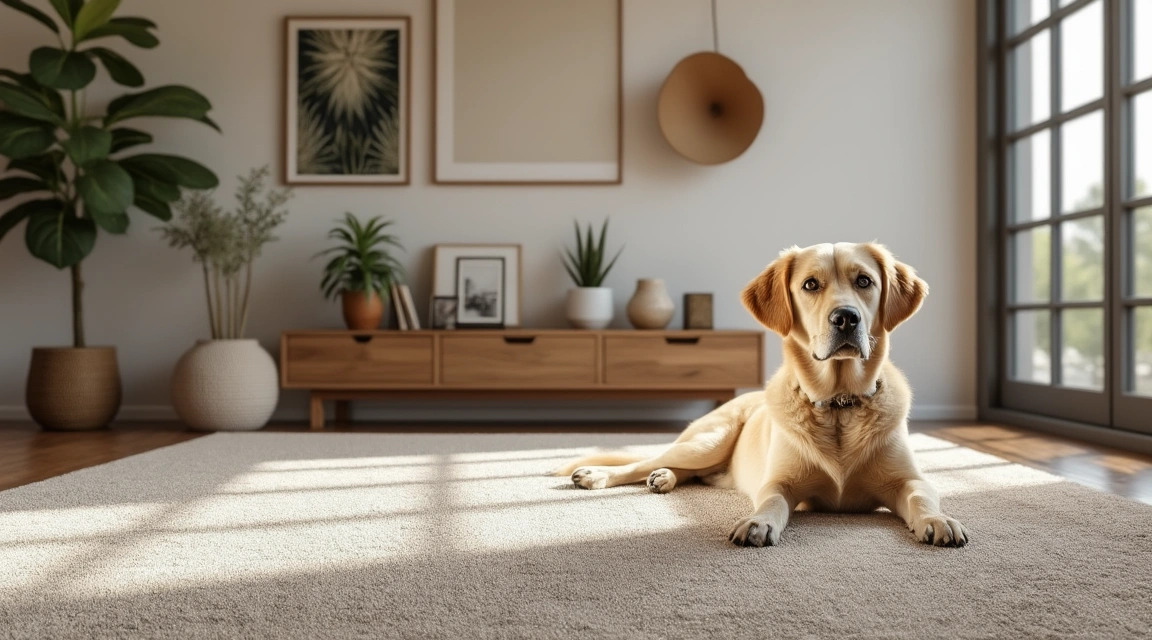
Strategic color choices dramatically reduce the visible impact of pet hair, dirt, and minor staining between cleanings. Think about the colors you see most often on your pets and in your yard.
Medium tones work better than very light or very dark colors. Light carpets show every muddy paw print and stain, while dark carpets highlight pet hair and dust. Consider colors with slight variations or patterns—these hide imperfections far better than solid colors. If you have a golden retriever, avoid dark brown or black carpets. If you have a black cat, skip cream or white options. Multi-colored or flecked patterns in neutral tones like taupe, gray-brown, or mixed beiges provide the most forgiving appearance for homes with pets.
Common Mistakes Pet Owners Make
Even with good intentions, many pet owners make predictable errors when selecting carpet. Learning from these common mistakes saves money and frustration.
The first major mistake is prioritizing appearance over performance. That gorgeous plush cream carpet in the showroom will look completely different after three months with a dog. Choose carpet that meets your practical needs first, then select the most attractive option within that category.
Second, many buyers focus exclusively on the carpet itself while neglecting padding quality. Spending more on premium carpet while using standard padding wastes money. The padding determines how long your carpet lasts and whether accidents create permanent odor problems.
Third, pet owners often underestimate the importance of professional installation. DIY installation or bargain installers frequently skip crucial steps like moisture barriers and proper seam sealing. These shortcuts create failure points where pet accidents cause maximum damage.
Fourth, buyers sometimes choose carpet based solely on initial cost without considering lifetime expenses. A budget carpet that requires replacement in four years costs more overall than quality pet-friendly carpet lasting twelve years. Calculate the cost per year of ownership, not just the installation price.
Finally, many people wait until their current carpet is completely destroyed before shopping for replacements. This rushed timeline forces compromises. Plan your carpet replacement while your existing floor still functions so you can research thoroughly and wait for sales.
Maintenance Tips for Longevity
Even the best pet-friendly carpet requires proper maintenance to deliver its full lifespan. Simple habits make an enormous difference in performance.
Vacuum high-traffic areas at least three times weekly using a vacuum designed for pet hair. Clean up accidents immediately—the faster you address spills, the less likely they’ll cause permanent damage. Keep a pet accident cleaning kit readily accessible with enzyme-based cleaners specifically formulated for pet messes. Regular professional cleaning every twelve to eighteen months removes deep-down dirt and oils that home equipment can’t extract.
Trim your pet’s nails regularly to minimize carpet damage. Place washable rugs or mats in high-traffic zones and near entrances. Consider restricting pet access to certain carpeted areas if possible, especially for young puppies still being house-trained.
Making Your Final Decision
Choosing pet-friendly carpet represents a significant investment in your home’s comfort and appearance. Take time to visit multiple retailers, request samples of your top choices, and place those samples on your floor where you can observe them for several days with your pets nearby.
Ask retailers specifically about their pet warranties—many manufacturers now offer specialized guarantees for homes with animals. Read the fine print carefully to understand what’s covered and what maintenance is required to keep the warranty valid.
Remember that the perfect carpet for your neighbor’s cats might not work for your dogs, and vice versa. Your pet’s specific behaviors, your home’s traffic patterns, and your cleaning habits all influence which option performs best. Don’t rush the decision. Quality pet-friendly carpet should serve your family well for a decade or more when you choose wisely and maintain it properly.
With the right carpet underneath your feet, you’ll enjoy a home that looks beautiful and feels comfortable while easily handling whatever your beloved pets throw at it—quite literally.