Choosing the right flooring when you have children, pets, or high household traffic can feel overwhelming. You need something that survives spills, scratches, muddy paws, and endless foot traffic while still looking good. This guide walks you through the best flooring options for busy families, step by step, so you can make a confident decision without needing any previous flooring knowledge.
Why Family-Friendly Flooring Matters
Your floor takes more abuse than any other surface in your home. Between juice spills, dropped toys, pet accidents, and the constant movement of people, regular flooring materials can show wear within months. Family-friendly flooring resists stains, cleans easily, handles impacts, and maintains its appearance despite daily chaos.
The right choice saves you money long-term by reducing replacement costs and cutting cleaning time significantly. More importantly, it gives you peace of mind—you won’t panic when someone drops a plate or tracks in mud.
Caution: Beautiful but delicate flooring like natural hardwood or white carpet might seem appealing, but these choices often create stress and constant maintenance headaches in active households.
Step 1: Identify Your Family’s Specific Challenges
Before looking at flooring types, list what your household deals with daily. Do you have toddlers who spill frequently? Large dogs who scratch? Teenagers who track in dirt? Multiple pets? Understanding your specific challenges helps you prioritize features.
Common family challenges include:
- Liquid spills from drinks, food, or accidents
- Scratches from pet claws or dragged furniture
- Mud and outdoor debris tracked inside
- Heavy foot traffic in hallways and kitchens
- Dropped toys, dishes, or other hard objects
- Noise from running children or pet movement
Write down your top three concerns. This list becomes your decision-making filter when comparing flooring options.
Caution: Don’t assume one flooring type handles everything equally. Each material has specific strengths and weaknesses that match different family situations.
Step 2: Consider Luxury Vinyl Plank (LVP) Flooring
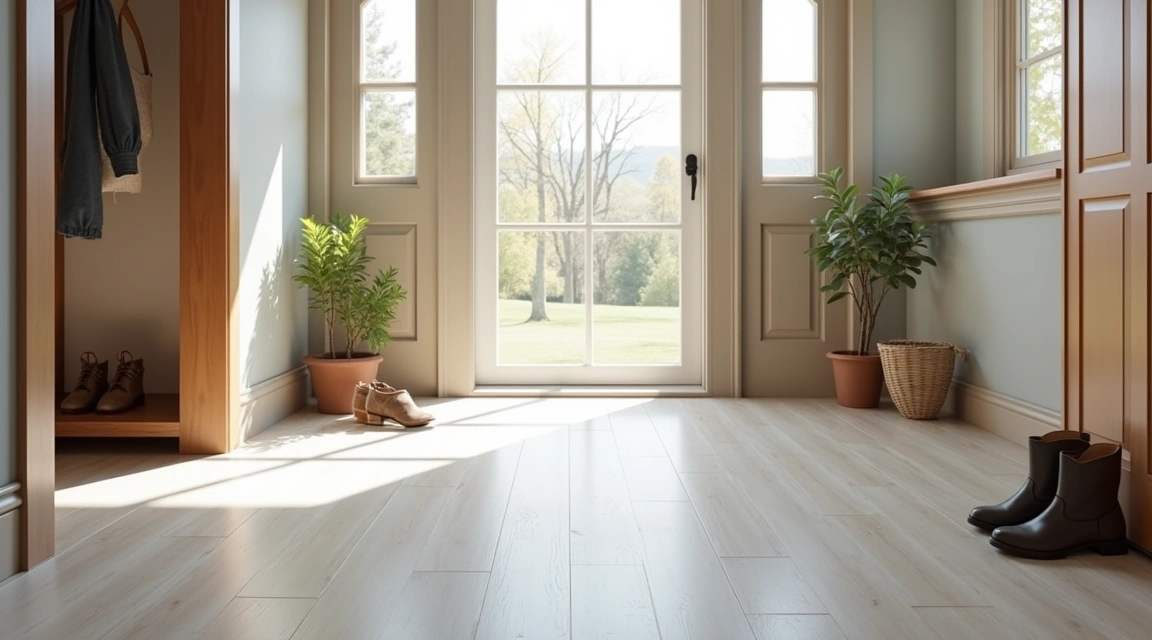
Luxury vinyl plank has become the top choice for busy families, and for good reason. This synthetic flooring mimics the look of hardwood but offers superior durability and water resistance.
LVP benefits for families:
- 100% waterproof (not just water-resistant)
- Scratch-resistant surface layers
- Easy to clean with simple mopping
- Comfortable underfoot, with some cushioning
- Affordable compared to genuine hardwood
- DIY-friendly installation options
Quality matters significantly with LVP. Look for products with wear layers of at least 12 mil thickness for household durability. Thicker wear layers (20 mil) handle heavy traffic even better. The product should specify “waterproof” rather than just “water-resistant.”
Real-world example: A family with two large dogs and three children installed LVP throughout their main floor. After two years, the flooring showed no visible scratches despite constant pet traffic, and spills wiped up instantly without staining.
Caution: Cheap vinyl flooring (under $2 per square foot) often lacks adequate wear layers and may dent, scratch, or show wear patterns within a year. Invest in mid-range or better quality for true durability.
Step 3: Evaluate Engineered Hardwood Options
If you love the authentic look of wood but need more durability than solid hardwood offers, engineered hardwood provides a middle ground. This flooring consists of a real wood veneer bonded to multiple layers of plywood or composite material.
Engineered hardwood advantages:
- Genuine wood appearance and feel
- More stable than solid wood (resists warping)
- Can handle moderate moisture better than solid hardwood
- Many products can be refinished once or twice
- Increases home resale value
For busy families, choose engineered hardwood with:
- Thicker wear layers (at least 4mm) for potential refinishing
- Hard wood species like oak or hickory rather than softer woods
- Factory-applied scratch-resistant finishes
- Click-lock installation for easier future repairs
Engineered hardwood works best in families without very young children or large pets. It handles normal family life well but isn’t fully waterproof like LVP.
Caution: Engineered hardwood with thin wear layers (under 2mm) cannot be refinished and may show damage quickly. These budget versions offer little advantage over quality LVP while costing more.
Step 4: Examine Tile Flooring for High-Traffic Areas
Porcelain or ceramic tile excels in specific family situations, particularly in kitchens, mudrooms, and bathrooms where water exposure is constant.
Tile benefits for families:
- Completely waterproof and stain-proof
- Extreme durability lasting decades
- Easy cleaning—even tough messes wipe away
- Doesn’t harbor allergens or bacteria
- Resistant to scratches and impacts
Tile drawbacks to consider:
- Hard surface can be uncomfortable for long periods
- Cold underfoot without radiant heating
- Dropped dishes or glasses often break
- Grout lines require periodic cleaning and sealing
- More expensive and complex to install
Many families use tile strategically in entryways, kitchens, and bathrooms while choosing softer materials for living areas and bedrooms. This zoned approach maximizes each material’s strengths.
Choose porcelain over ceramic when possible—it’s denser and more durable. Look for textured or matte finishes rather than glossy tiles, which become slippery when wet.
Caution: Tile installation costs often equal or exceed material costs. Get multiple installation quotes before committing, as labor significantly impacts the total project budget.
Step 5: Understand Why Traditional Hardwood and Carpet Create Challenges
Solid hardwood floors and traditional carpet are popular, but both present specific difficulties for busy families.
Solid hardwood challenges:
- Scratches easily from pet nails and dragged objects
- Water damage from spills if not cleaned immediately
- Requires periodic refinishing (messy and expensive)
- Shows wear patterns in high-traffic areas
- Dents from dropped heavy objects
Traditional carpet challenges:
- Absorbs and holds stains permanently
- Traps allergens, pet dander, and odors
- Difficult to clean thoroughly
- Wears flat in traffic areas
- Damaged by pet accidents
If you love these materials, consider them for specific low-traffic areas. Solid hardwood works well in formal dining rooms or adult bedrooms. If you want carpet’s softness, use washable area rugs over hard flooring—you get comfort without permanent installation.
Caution: Marketing claims about “stain-resistant” carpet are misleading for families. While treatments help initially, they wear off over time, and no carpet truly resists all family-related messes.
Step 6: Make Your Final Decision With a Comparison Chart
Create a simple chart comparing your top choices against your specific family needs. Rate each option from 1-5 on factors that matter to you:
- Water resistance
- Scratch resistance
- Cleaning ease
- Comfort underfoot
- Budget fit
- Installation complexity
- Appearance appeal
For most busy families, luxury vinyl plank scores highest across categories. However, your specific situation might prioritize different factors. A family without pets but with young children might choose engineered hardwood. A family in a rainy climate might prefer tile near entrances.
Visit flooring showrooms and request samples to take home. Place samples in your actual rooms, spill water on them, drag furniture across them, and see how they look with your lighting. This hands-on testing reveals things specifications don’t show.
Caution: Showroom lighting differs dramatically from home lighting. Flooring that looks perfect in bright showroom lights may appear too dark or too light in your actual rooms.
Common Mistakes Families Make When Choosing Flooring
Prioritizing appearance over function: Beautiful floors that don’t survive daily life create regret and unexpected expenses. Choose durability first, then find the most attractive option within durable categories.
Underestimating moisture exposure: Families generate more moisture than you might expect—spills, wet shoes, pet accidents, and steamy bathrooms. Water-resistant flooring isn’t enough; choose waterproof materials for peace of mind.
Buying the cheapest option: Budget flooring typically uses inferior materials that show wear quickly. The savings disappear when you replace flooring years earlier than expected. Mid-range quality offers the best value.
Ignoring noise factors: Hard flooring amplifies sound. If noise bothers you, choose materials with attached underlayment or add quality underlayment during installation to reduce sound transmission.
Forgetting about installation costs: Some flooring costs $3 per square foot for materials but $5 per square foot for installation. Always get total project estimates including both materials and labor before deciding.
Skipping proper underlayment: Good underlayment adds comfort, reduces noise, and protects flooring from subfloor irregularities. This invisible layer significantly impacts how flooring performs and feels.
Summary: Finding the Right Balance for Your Family
The best flooring for busy families combines durability, easy maintenance, and reasonable cost. Luxury vinyl plank leads for most situations due to its waterproof nature, scratch resistance, and cleaning ease. Engineered hardwood works well for families wanting authentic wood character without solid hardwood’s fragility. Tile excels in moisture-prone areas but works best used strategically rather than throughout entire homes.
Remember these key principles: Choose waterproof over water-resistant. Invest in quality rather than the cheapest option. Test samples in your actual home before committing. Consider how each family member uses the space—kids play differently in rooms than adults do.
Your perfect flooring balances practical performance with aesthetic preferences. By following these steps and avoiding common mistakes, you’ll select flooring that serves your family well for years while maintaining its appearance despite daily chaos. The right choice transforms your home from a space where you constantly worry about damage into a place where your family truly lives comfortably.